

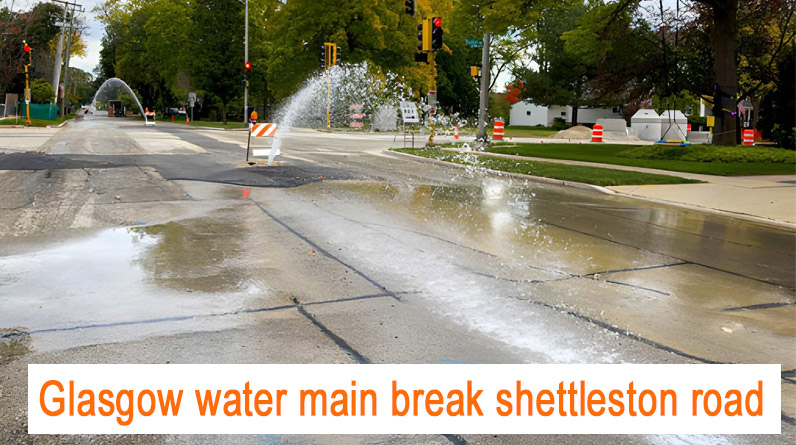
If you live in Glasgow’s East End, particularly around Shettleston Road, you’ve likely experienced the frustration of yet another water main break disrupting your daily life. It’s not your imagination—Shettleston Road has become something of a hotspot for burst water mains, with major incidents recorded in February 2023, February 2025, May 2025, and September 2025.
But why does this particular stretch of road seem to suffer more than others? And more importantly, what does this pattern mean for residents, businesses, and commuters who rely on this vital East End artery?
This article examines the recurring water main failures on Shettleston Road, exploring the underlying factors that make this corridor particularly vulnerable, and what the pattern of repeated breaks reveals about Glasgow’s wider infrastructure challenges.
A Timeline of Trouble: Shettleston Road’s Water Main Incidents
To understand the scale of the problem, it’s worth mapping out the incidents that have plagued Shettleston Road in recent years:
February 2023: The Early Warning
A significant burst caused road closures and diversions, requiring approximately 50 personnel from Scottish Water and contractors to resolve. Two-way traffic signals were quickly installed to manage the disruption, but the incident served as an early warning of the infrastructure’s fragility.
February 2025: Homes and Businesses Hit Hard
Another major burst left numerous properties in the G32 postcode area without water. Local businesses reported water “coming down Polish Road like a river,” with significant impacts on trade and daily operations. The community rallied to support affected businesses, but the economic toll was considerable.
29 May 2025: The Junction Closure
A burst near the junction of Shettleston Road and St Mark Street caused widespread flooding, forcing closures from Old Shettleston Road to Fernan Street, and extending towards Westmuir Street and Hart Street. Water gushed through cracks in the road surface within minutes, bringing morning traffic to a standstill. Many households woke to find their taps dry, whilst commuters faced journey times that doubled during peak hours.
September 2025: Infrastructure Under Scrutiny
Yet another rupture highlighted the persistent vulnerabilities in the area’s water infrastructure, once again disrupting supply to the G32 area and raising serious questions about the frequency of failures along this particular corridor.
This pattern isn’t random—it’s symptomatic of deeper, structural issues that make Shettleston Road particularly susceptible to water main failures.
Why Shettleston Road? The Factors Behind Repeated Failures
Several interconnected factors make Shettleston Road a vulnerable point in Glasgow’s water network. Understanding these helps explain why this area experiences more frequent failures than other parts of the city.
1. Age and Material of Underground Infrastructure
Much of the water infrastructure beneath Shettleston Road dates back several decades. These older mains were often constructed from cast iron or early metal alloys that, whilst robust when new, become increasingly brittle over time. Corrosion weakens joints, and the structural integrity gradually declines to a point where failure becomes almost inevitable.
Unlike modern pipes made from ductile iron or high-density polyethylene, these aging mains have limited capacity to withstand the stresses of contemporary urban life.
2. The Size and Pressure of the Mains
Shettleston Road serves as a major supply route for the East End, meaning the water mains running beneath it are substantial—serving hundreds, if not thousands, of properties. These large-diameter mains operate under significant pressure to maintain supply across a wide area.
When pressure fluctuations occur—whether from sudden changes in demand, rapid valve operations elsewhere in the network, or hydraulic shocks—the stress on already weakened pipes can exceed safe thresholds. In a large main, the consequences of such failure are far more dramatic than in smaller residential pipes.
3. Constant Traffic Load and Ground Vibration
Shettleston Road is one of Glasgow’s busiest thoroughfares, carrying constant heavy traffic including buses, lorries, and commercial vehicles. This continuous ground load creates vibrations that travel through the soil to the pipes beneath.
Over years and decades, these vibrations contribute to metal fatigue, loosening joints and accelerating the degradation of pipe walls. The combination of heavy traffic above and aging infrastructure below creates a perfect storm for failure.
4. Soil Conditions and Ground Movement
The East End’s geology plays a subtle but important role. Soil settling, seasonal ground movement, and the gradual shifting that occurs in urban environments can destabilise buried pipelines. When pipes are already weakened by age and corrosion, even minor ground shifts can be enough to trigger a rupture.
5. A History of Patch Repairs
In some cases, previous repairs along Shettleston Road may have addressed immediate problems without replacing entire vulnerable sections. Whilst patch repairs can provide temporary solutions, they often leave weak spots in the system. These repaired sections may hold for months or years before failing again—creating a cycle of recurring incidents.
The Compounding Cost of Repeated Failures
Each water main break on Shettleston Road isn’t just a standalone incident—the repeated nature of these failures creates compounding problems for the community.
Economic Impact on Local Businesses
For businesses along Shettleston Road, each water main break represents lost revenue. Cafés cannot serve food without clean water, salons cannot wash hair, laundrettes cannot operate machines, and shops see customer footfall plummet as people avoid the area or cannot access it due to road closures.
The cumulative effect of multiple incidents over two years has been significant, with some small businesses struggling to absorb the repeated hits to their turnover.
Erosion of Community Trust
Each time residents of the G32 area wake to find their water supply disrupted again, trust in the infrastructure erodes a little further. The psychological impact of unreliable essential services shouldn’t be underestimated—particularly for vulnerable groups such as elderly residents, families with young children, and those with medical needs requiring consistent water access.
Traffic and Commuter Fatigue
Regular commuters have learned to dread news of another Shettleston Road closure. With public transport rerouted, side streets congested, and journey times unpredictable, the repeated disruptions take a toll on daily life. For many East End residents, the unreliability has become a source of ongoing frustration.
What’s Being Done: The Glasgow Resilience Project
Scottish Water is not unaware of the challenges facing Shettleston Road and the wider Glasgow network. The Glasgow Resilience Project represents a significant long-term investment aimed at improving water supply reliability across the city.
This project involves installing new pipes to connect Glasgow’s water network with Ayrshire’s supply system, creating redundancy and improving resilience. The goal is to ensure that when localised failures occur, water can be rerouted more efficiently, minimising disruption to homes and businesses.
However, such large-scale infrastructure projects take years to complete, and in the meantime, areas like Shettleston Road remain vulnerable to the aging pipes beneath them.
Targeted Replacements Needed
Beyond the broader resilience project, there’s a clear need for targeted replacement of the most vulnerable sections of pipe along Shettleston Road. Proactive replacement—particularly of large mains in high-traffic areas—would be more cost-effective in the long run than continuing the cycle of emergency repairs.
Modern materials such as ductile iron or polymer pipes offer far greater resistance to pressure surges, corrosion, and ground movement. Replacing aging cast iron mains with these materials would significantly reduce the likelihood of future failures.
What Residents Should Know and Do
If you live or work near Shettleston Road, understanding what to do during and after a water main break can help you manage disruptions more effectively.
During a Water Main Break
- Check Scottish Water’s website and social media for real-time updates on the incident, affected areas, and estimated restoration times
- Avoid the immediate area if possible—flooded roads can be hazardous, and emergency crews need access
- Store water if you have advance warning—fill clean containers, baths, or buckets to tide you over during the outage
- Support vulnerable neighbours—check on elderly residents or those with young children who may need assistance
When Water Supply Returns
- Expect discoloured water initially—brown or cloudy water is common after a burst, caused by disturbed sediment or trapped air
- Run cold taps slowly for 30 to 60 minutes until water runs clear before using appliances like dishwashers or washing machines
- Avoid hot water until supply stabilises to prevent sediment entering your boiler or heating system
- Once clear, the water is safe—discolouration is usually harmless once it clears
Planning Ahead
- Keep bottled water at home for emergencies—a supply for drinking, cooking, and basic hygiene
- Know your postcode area—the G32 area has been particularly affected, so residents here should be especially prepared
- Sign up for alerts—Scottish Water offers text and email notifications about planned work and emergencies in your area
- Have alternative plans—identify where you could go (family, friends, community centres) if an extended outage occurs
The Bigger Picture: Infrastructure Investment or Continued Disruption?
The pattern of repeated water main breaks on Shettleston Road is not just a local inconvenience—it’s a microcosm of a wider infrastructure challenge facing cities across the United Kingdom. Much of our underground infrastructure was built in the post-war period or earlier, and is now reaching the end of its design life.
The question facing Glasgow—and Scottish Water—is whether to continue managing the problem reactively, responding to each burst as it occurs, or to invest proactively in wholesale replacement of vulnerable sections before they fail.
From a cost perspective, reactive maintenance may seem cheaper in the short term. But when you factor in the economic impact on businesses, the disruption to thousands of residents, the traffic chaos, and the cost of emergency callouts, the case for proactive investment becomes compelling.
A Call for Prioritisation
Shettleston Road—as a major artery serving a densely populated area with demonstrable vulnerability—should be prioritised for infrastructure renewal. The pattern of failures is clear, the underlying causes are well understood, and the community has borne the disruption multiple times.
Waiting for the next inevitable failure serves no one’s interests. Proactive replacement of the most vulnerable sections would provide long-term reliability, protect local businesses, and restore confidence in the essential services that underpin daily life.
Conclusion: Breaking the Cycle
Shettleston Road’s recurring water main breaks are not the result of bad luck or random chance. They’re the predictable outcome of aging infrastructure operating under stress in a busy urban environment. The pattern tells a clear story: without intervention, more failures are likely.
For residents of the G32 area and those who travel along Shettleston Road daily, this knowledge is both frustrating and empowering. Frustrating because the solution—infrastructure replacement—requires time and investment. Empowering because understanding the problem helps residents prepare, advocate for change, and make informed decisions about how to manage future disruptions.
The Glasgow Resilience Project offers hope for improved long-term reliability, but targeted action on known vulnerable sections like Shettleston Road would provide more immediate relief. Until that happens, East End residents should remain prepared for the possibility of further incidents, whilst continuing to press for the proactive investment their community deserves.
The question isn’t whether Shettleston Road will experience another water main break—it’s whether that break will happen before the aging infrastructure beneath it is finally replaced.